

MENTAL HEALTH AWARENESS WEEK 2026
What We Learned From The Pitt
Please note: This article discusses mental health, depression, PTSD, suicide, grief, bereavement, and self-harm. If these subjects are difficult for you, please consider whether now is the right time to continue reading.
During my staycation this week — between chores, day trips, walking, and trying to slow life down for a few days — my wife and I binged Season One of the remarkable The Pitt from Warner Bros. Discovery
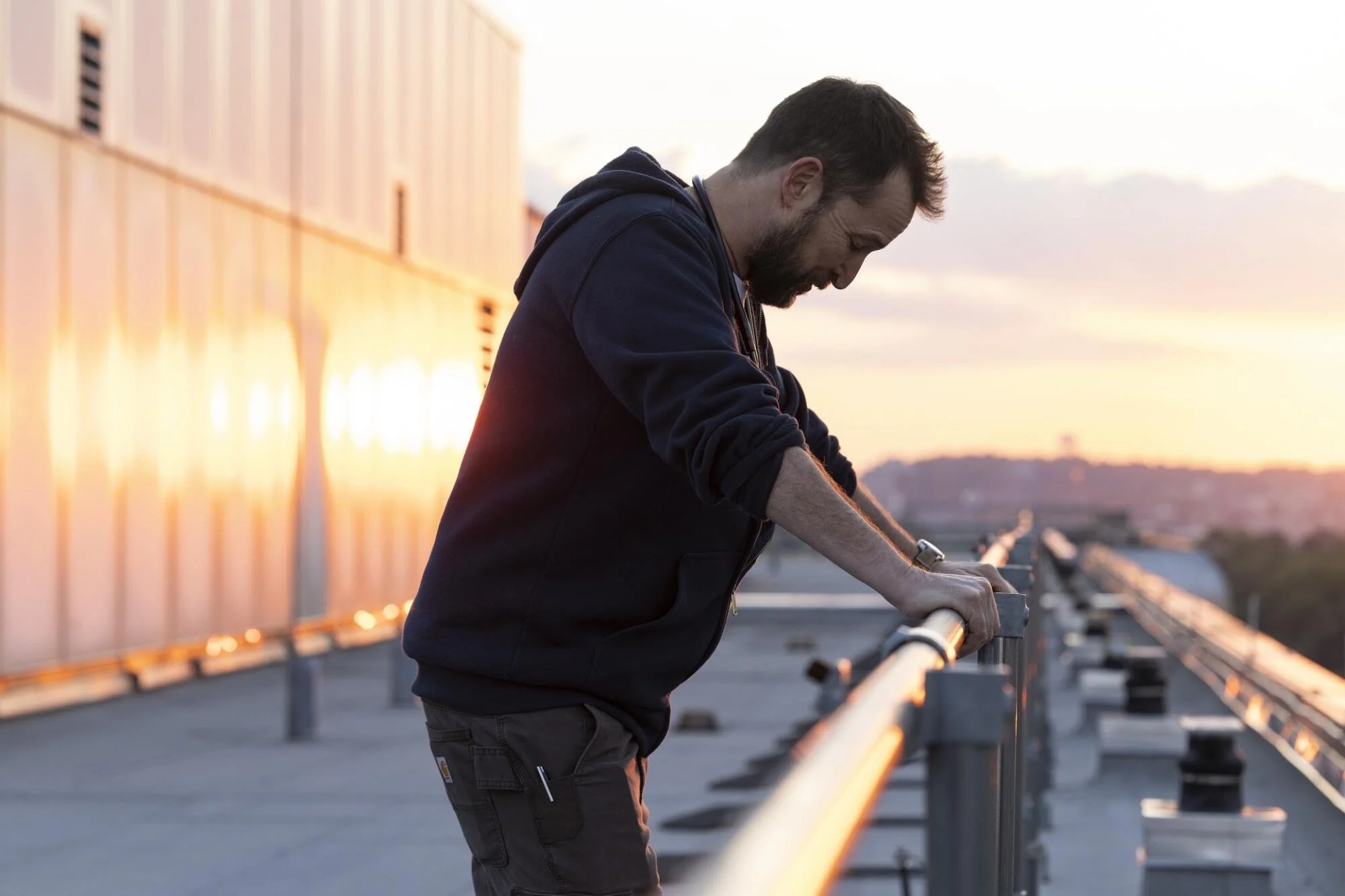
If you have not seen it, the series follows, hour by hour, a gruelling fifteen-hour shift inside a Pittsburgh trauma hospital emergency department.
The cast is led by the outstanding Noah Wyle as senior physician Dr. Michael “Robby” Robinavitch.
I will deliberately avoid spoilers because the series deserves to be experienced fresh.
But what struck me almost immediately was this:
The Pitt is not simply about emergency medicine.
It is about emotional survival.
Within the first episode alone, the show tackles suicidal ideation, depression, post-traumatic stress, burnout, grief, and the hidden emotional toll carried by medical professionals. These themes are not fleeting moments for dramatic effect; they run through the entire series with remarkable honesty and sensitivity.
Watching it, I genuinely became the meme of Leonardo DiCaprio pointing at the television, saying:
“They get it.”
Because for much of my life, I never truly believed people did understand what living with unresolved grief, anxiety, and depression actually felt like.
A Little About Me
I am sharing part of my own story here because if even one person reading this feels less alone afterwards, then it is worth writing.
All my life, I have been a sensitive soul.
Emotionally driven, yet deeply analytical and technical in how I think — which can create its own internal contradictions. Feeling everything intensely while simultaneously trying to rationalise it all away.
My childhood was wonderful. Truly idyllic.
I grew up around Llandovery in rural Wales, spending much of my childhood outdoors, usually near rivers, fields, or woods, or lost in my imagination. I was an average student at the time academically, as I was too interested in everything else to apply myself. However, I was and remain a voracious reader with an active mind.
Then, at fifteen years old, my father died suddenly from a heart attack.
He was a wonderful man.
And with his death, day instantly became night.
What I came to understand much later was how profoundly traumatic that moment truly was. He died on the eve of my GCSE examinations, and beyond the grief itself, I later recognised I had developed PTSD after witnessing him being taken away to the hospital.
At the time, however, there was very little support.
No counselling. No real conversations around mental health. No structured emotional support. My family was and remains incredible, but they couldn't carry my weight whilst dealing with their own complex grief.
You simply carried on.
So I tried.
I went to college in Llanelli to study computing, but emotionally, I could not function. Eventually, I stepped away, worked for a period in a video store, and then later returned to education to study business, eventually leading to my degree.
Looking back now, I genuinely do not know how I held things together.
Like many people of that generation, I coped badly but functionally. I self-medicated through cigarettes, alcohol, distraction, humour, and work.
Outwardly, life continued.
Internally, grief simply remained buried.
When The Armour Finally Cracked
The true collapse came in 2004 when my mother died following a brief period in hospital.
There were complicated emotions surrounding her passing and difficult circumstances in her life that I believe deeply affected her well-being.
At the same time, I was trying to build my career across Cardiff and Bristol, managing teams and professional responsibilities while privately falling apart emotionally.
My resilience failed.
The armour evaporated.
That was when medication entered my life, alongside counselling support through both the NHS and later workplace EAP programmes. Unfortunately, at that stage in my life, the counselling never truly connected with me in the way I needed.
Still, life also brought many blessings during those years.
I had opportunities to work in the Isle of Man for two marvellous organisations. I met my now wife, we built a family together, and eventually returned home to Wales in 2009.
But we landed hard financially.
We faced significant pressures as a young family. A close relative was bravely battling cancer — thankfully now thriving and in remission — and our son was trying to settle into secondary school. Which I understand since, that he was bravely dealing with a number of his own challenges which never came to light at the time.
Through all of this, depression arrived in waves.
Some days, I could barely leave the house.
Looking back now, I realise none of the original grief had ever truly been processed or resolved. I was trapped in a cycle of trying to appear strong while emotionally deteriorating beneath the surface.
People would often say:
“You’re always smiling.”
What they did not realise was that sometimes smiling was survival camouflage.
With medication increasing over time, I eventually found myself emotionally numbed to almost everything.
I functioned. I worked. I smiled. But internally I often felt robotic — simply moving through routines without truly feeling present in my own life.
Losing My Brother
Then, in June 2024, my incredible brother Chris Davies died suddenly at the age of 62.
Chris was my oldest brother and, quite literally, a rolling stone. A genuinely cool gentleman with stories for days, humour in abundance, and a rebellious spirit that somehow made him feel indestructible. We would talk, putting the world to rights, into the early hours of the morning, both in and out of drink. Sometimes we would argue as I worried about his lifestyle, but we always made up with mutual overwhelming respect.
He used to joke that he had spent his life dodging bullets.
And somehow, part of me believed he always would.
But eventually, the bullet caught him.
And he died suddenly.
My colleagues at the time were remarkable in supporting me as I immediately returned to be with my family. But emotionally, this truly became the final straw.
The camel’s back was already carrying too much weight.
This broke me completely.
And strangely, that is one of the reasons The Pitt affected me so profoundly.
The series portrays Dr. Robby’s mental health struggles with extraordinary sensitivity — the quiet panic beneath professionalism, the desperate effort to maintain composure while internally unravelling.
That fear of vulnerability. That terror of breaking down publicly. That anxiety about being seen struggling at work.
I recognised it immediately.
And I suspect many people reading this will recognise it too.
Taking yourself away somewhere private just to breathe.
A corridor. A stairwell. A toilet cubicle. Outside in the rain. Sitting in your car.
Anywhere you can compose yourself unseen before returning to the professional version of yourself that the world expects.
The Pitt captures this brilliantly.
Not theatrically. Not sensationally. Humanly.
None of my professional roles comes remotely close to the unimaginable pressures faced by emergency trauma teams, and I would never dare compare them directly. I have family that does that very same job for a living, and my respect remains and always will be limitless for them.
But the emotional truth resonated deeply:
Sometimes the hardest thing in the world is simply continuing to function while everything inside feels like it is collapsing.
What Finally Changed My Life
After my brother’s passing, something finally shifted.
After a weekend away with my wife and our friend, where I didn't want to really engage or participate in anything, I decided then that this finally and absolutely had to change.
I had an amazing GP see me at that time, who, whilst gently recommending counselling, encouraged me to try counselling again after my skepticism from it not really being that effective previously, balanced with medication. He offered the NHS service but advised that there was an extensive waiting list. So, sitting in my car at the surgery car park, I discovered that Marie Curie was able to help.
For the first time in my life, I received counselling support that genuinely connected with me emotionally through Marie Curie UK.
Six one-hour counselling sessions.
Simple on paper.
Life-changing in reality.
For the first time, I felt genuinely heard, understood, and supported in a way that helped me begin rebuilding myself emotionally from the ground up.
And rebuilt is genuinely how it feels.
Today, I am no longer on medication for depression or anxiety. I had previously stopped drinking alcohol and smoking since January 1st 2021. That does not mean life is magically perfect or that grief disappears. It means I finally began properly processing decades of emotional weight rather than endlessly suppressing it.
That support changed my life.
Which is one of the reasons I now actively fundraise for Marie Curie.
I completed 12 miles across the Gower Coast last September, and I am heading back for the sequel on September 5th, and this time, if I have to crawl the damn journey, I will get to 21 miles.
Please support, share, and donate here:
https://www.justgiving.com/page/tyrone-davies-2?utm_medium=FA&utm_source=CL
Their work is not only about supporting people in their final days, although that work is extraordinary in itself.
It is also about supporting the people left behind.
The grieving. The exhausted. The traumatised. The people who are trying desperately to keep functioning while emotionally drowning.
People like me.
Final Thoughts
Mental Health Awareness Week should never simply become a slogan or a corporate hashtag exercise.
It should be about honesty.
About compassion.
About recognising that many people around us are carrying battles we cannot see.
If you are struggling right now, please know this:
You are not weak. You are not failing. And you do not have to carry everything alone.
Speak to somebody. A friend. Family. A GP. A counsellor. A charity. Anyone.. even someone like me who knows the bumpy road.
I talk so openly about my story, as I feel it's important to take the stigma away from discussing mental health, and particularly for guys like me. Yes, if you're reading this on your phone after 6 pints in a beer garden and a packet of cigs, and it resonates. There is hope, don't go to the off-licence on the way home to stock up. Stop for a second, take a breath, take the first step, and get off the grief train.
Because silence can quietly become a prison.
And if you can support organisations like Marie Curie through fundraising, volunteering, or awareness, I would be incredibly grateful for your support of my own fundraising efforts to help more people receive the kind of compassion and care that ultimately helped rebuild my life.
https://www.justgiving.com/page/tyrone-davies-2?utm_medium=FA&utm_source=CL
Sometimes the bravest thing a person can say is:
“I’m not coping very well.”
And sometimes the most important thing another human being can say in return is:
“I understand. Let’s get through this together.”
The Pitt (c) Warner Bros. Television 2026 - Available on HBO Max globally
#MentalHealthAwarenessWeek #MentalHealth #MentalHealthMatters #MensMentalHealth #Depression #PTSD #Bereavement #Grief #Counselling #MarieCurie #Wellbeing #Mindfulness #Resilience #Leadership #ThePitt #NoahWyle #MentalHealthAwareness #Wales #Hope #YouAreNotAlone
